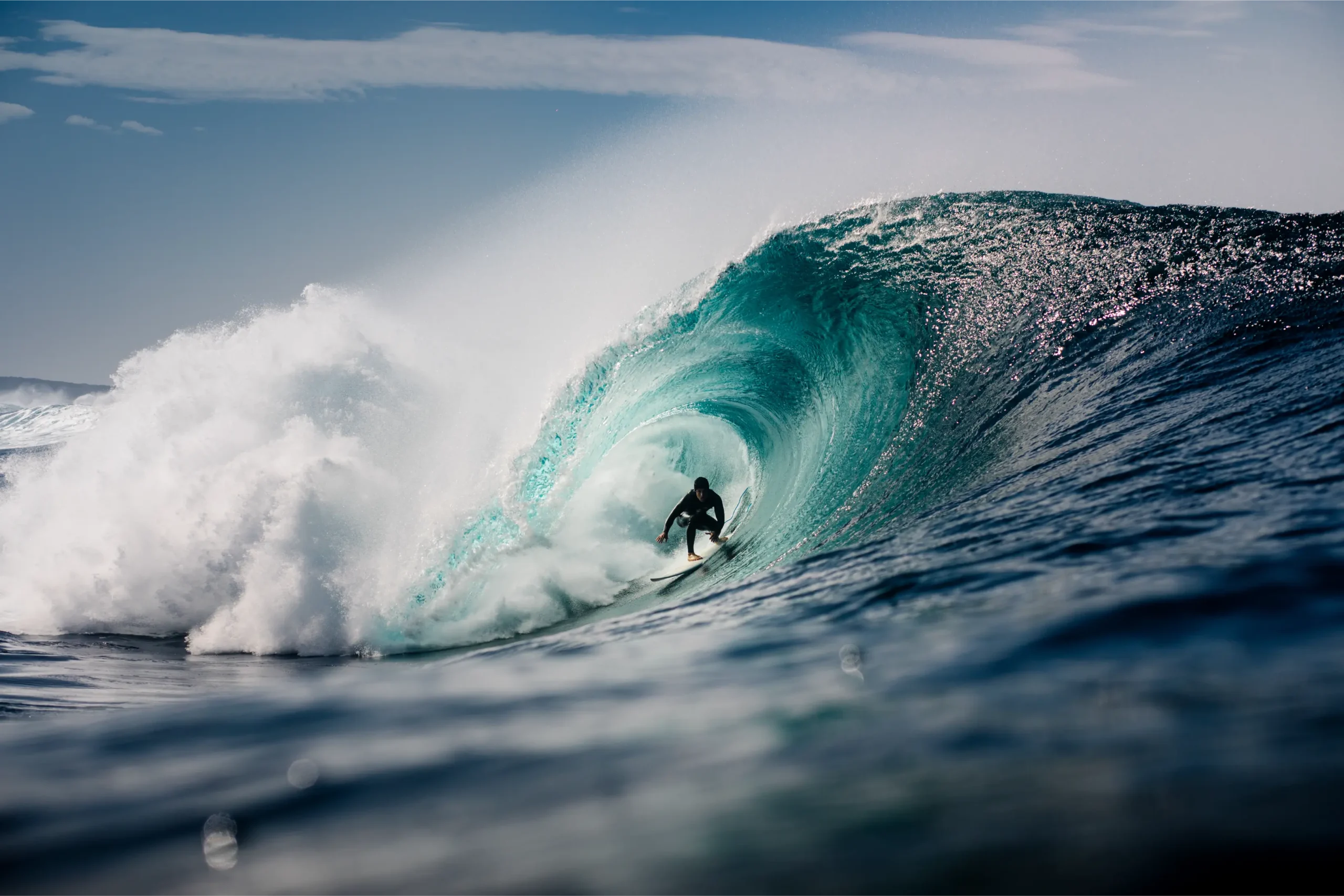
Lanzarote lleva décadas siendo uno de los destinos de surf más importantes de Europa. Personas de todo el mundo vienen cada año buscando sus olas, pero muchas veces se olvidan de algo importante: antes de ser un destino turístico, esta es la casa de mucha gente que lleva toda la vida surfeando aquí.
Uno de los motivos por los que Lanzarote sigue conservando una escena local tan fuerte es porque muchas de sus olas continúan teniendo una afluencia relativamente baja si las comparamos con otros destinos europeos. Es algo que entre todos deberíamos intentar cuidar.
Después de muchos años surfeando en la isla, estos son algunos consejos que siempre comparto con los huéspedes de Garage La Santa.
Surfea con gente local
Es probablemente el mejor consejo que puedo darte.
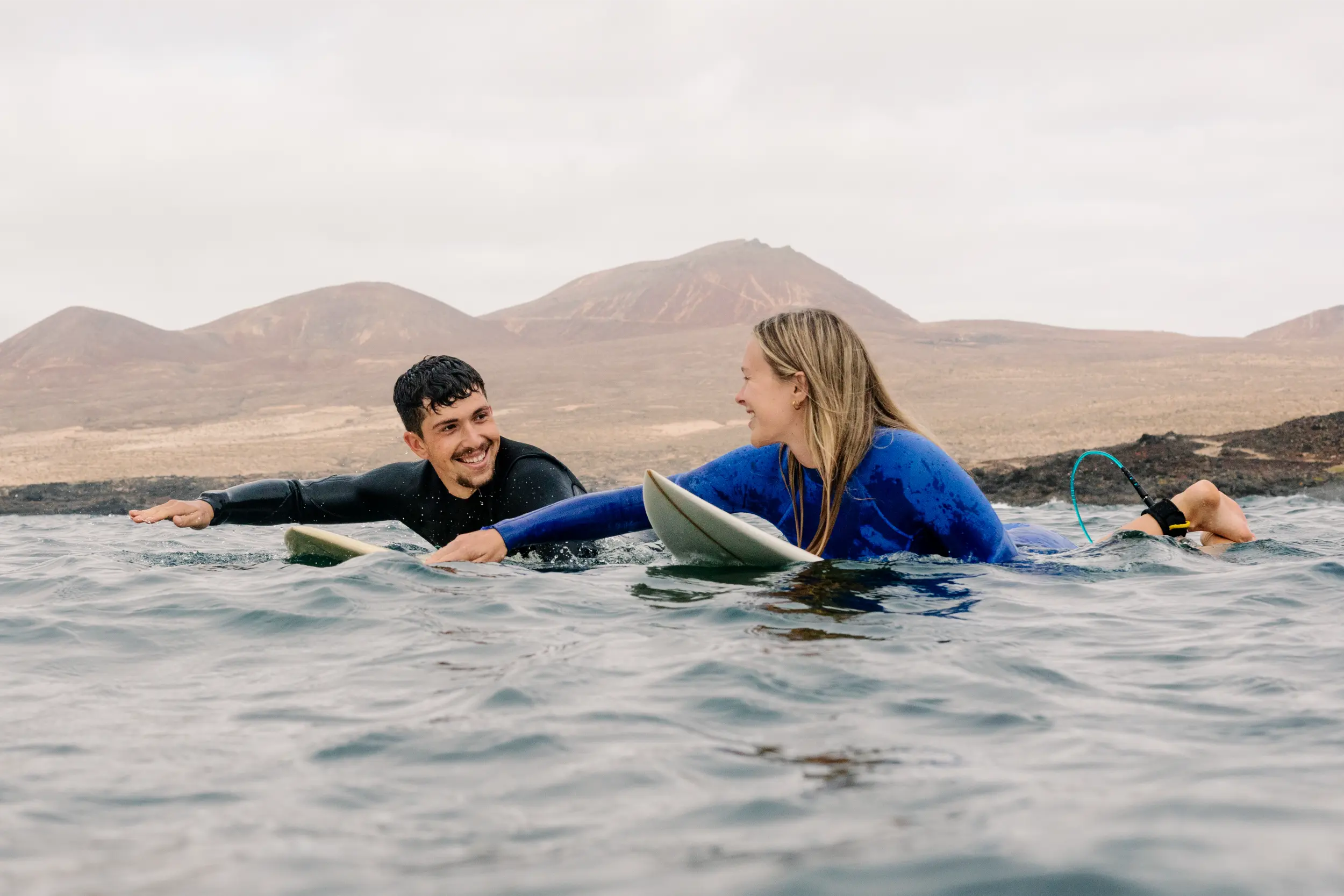
Además de mejorar mucho más rápido, conocerás cómo funciona cada ola, cuáles son los mejores horarios según el viento y la marea y aprenderás a moverte con respeto dentro del agua.
En la isla hay grandes profesionales a los que recomiendo siempre, como José María de Surf Training, Borja Padrón, Franito Sáenz, Luis Díaz o Manuel Lezcano. Además de ser grandes surfistas, conocen perfectamente la costa de Lanzarote y sabrán recomendarte el lugar adecuado según tu nivel y las condiciones de ese día.
Aporta también a la comunidad local
Viajar también consiste en decidir dónde dejamos nuestro dinero.
Si vienes a surfear a Lanzarote, intenta que una parte de tu viaje repercuta directamente en la gente que vive aquí. Reserva clases con instructores locales, alquila material en negocios del pueblo, compra tablas hechas por shapers de la isla o contrata fotógrafos locales para llevarte un recuerdo de tu viaje.
Si quieres fotografías en el agua, te recomiendo el trabajo de Germán Abreu o David Toribio, dos fotógrafos que conocen perfectamente las olas de la isla y llevan muchos años documentando la escena local.
Los primeros días, elige olas fáciles
Aunque tengas experiencia, siempre recomiendo empezar por olas más accesibles para entender cómo funciona el mar en Lanzarote.
Famara ofrece muchas opciones para todos los niveles, igual que zonas como El Muelle o El Papelillo cuando las condiciones acompañan.
No tengas prisa por surfear las olas más conocidas. La isla lleva aquí miles de años y las olas seguirán esperando.
Si quieres surfear en La Santa
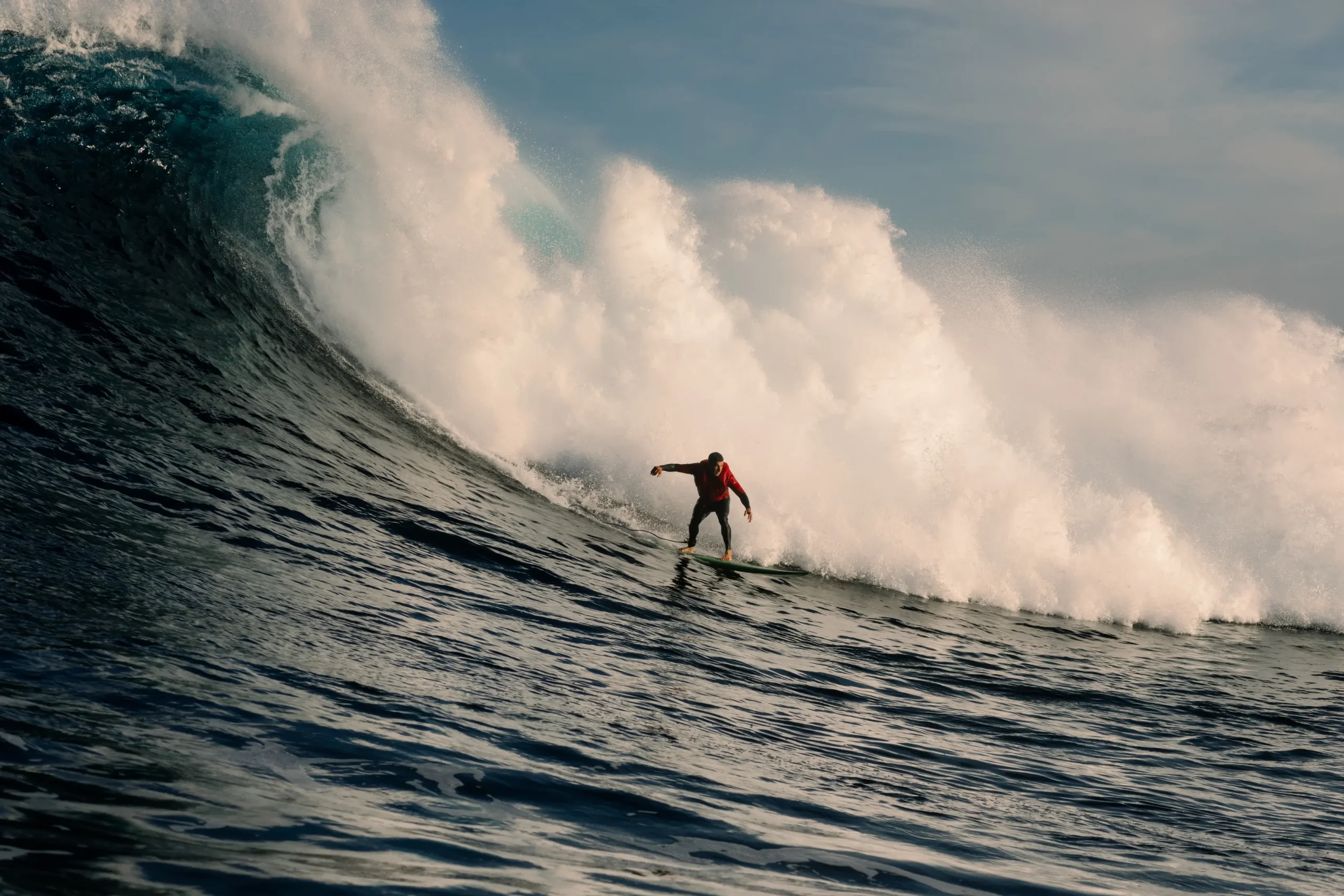
La Santa concentra algunas de las olas más conocidas de Europa y también una comunidad local muy vinculada al surf desde hace décadas.
Si tienes el nivel suficiente para surfear aquí, habla antes con gente local. Pregunta cuáles son los mejores horarios, cómo está funcionando cada ola ese día y cuál es la mejor manera de entrar sin molestar a quienes surfean allí habitualmente.
Una conversación de cinco minutos suele abrir muchas más puertas que entrar al agua pensando que todo funciona igual que en cualquier otro lugar.
No intentes colocarte en el pico
Cuando llegues a una ola nueva, especialmente si es la primera vez que la surfeas, evita remar directamente hasta el pico.
Mi consejo es que entres con calma, te coloques en la parte final de la ola y dediques un rato a observar cómo funciona el spot y cómo se organiza la gente que surfea allí habitualmente.
Saluda, habla con la gente que está en el agua y muestra interés por entender el lugar antes de intentar coger las mejores olas. Ese pequeño gesto suele marcar una enorme diferencia.
Evita entrar en grupos grandes
Siempre que puedas, entra solo o como mucho con otra persona.
Los grupos grandes llaman mucho la atención, generan más presión en el pico y cambian completamente el ambiente de una ola. Si todos ponemos un poco de nuestra parte, será mucho más fácil que locales y visitantes podamos compartir el agua con respeto.
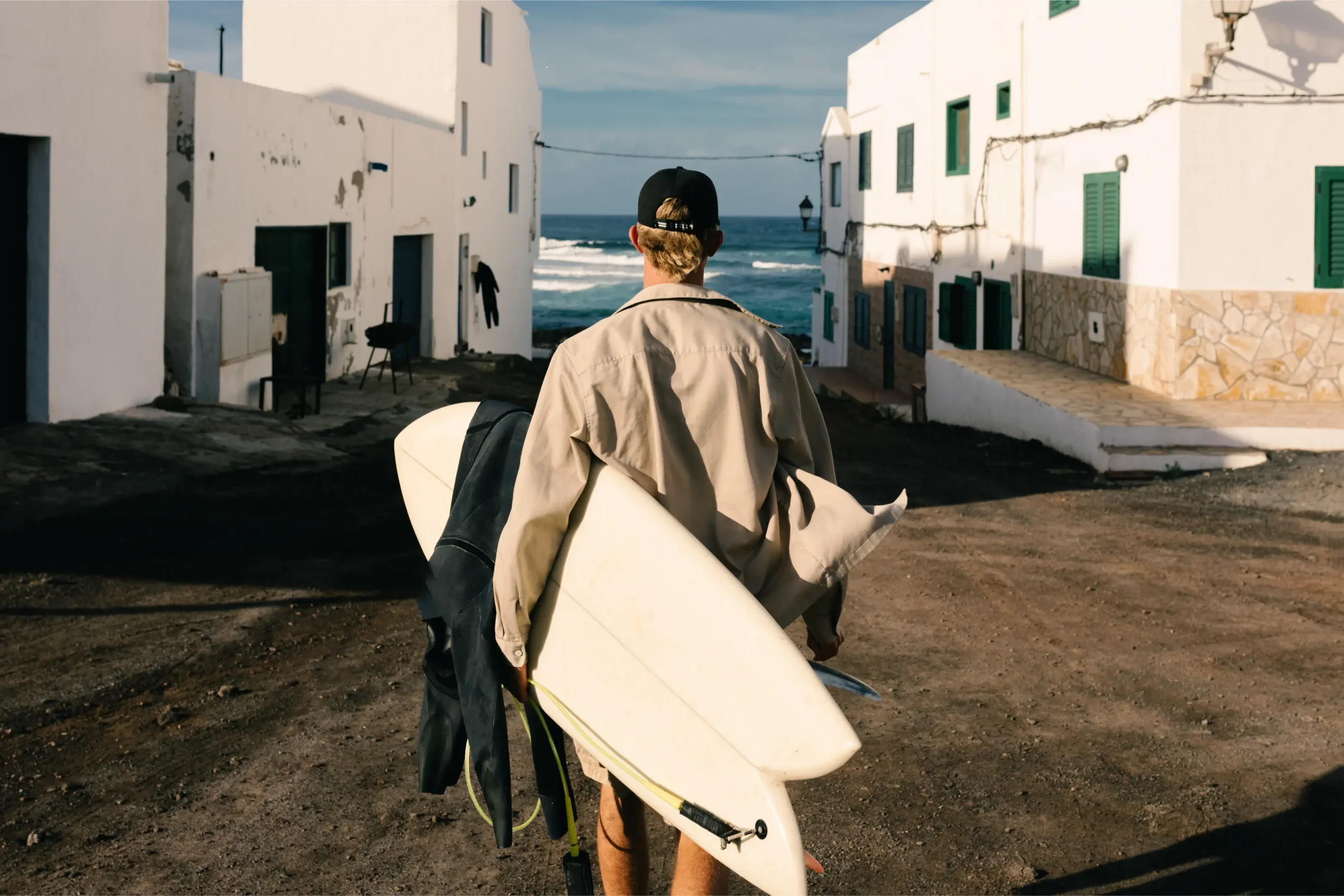
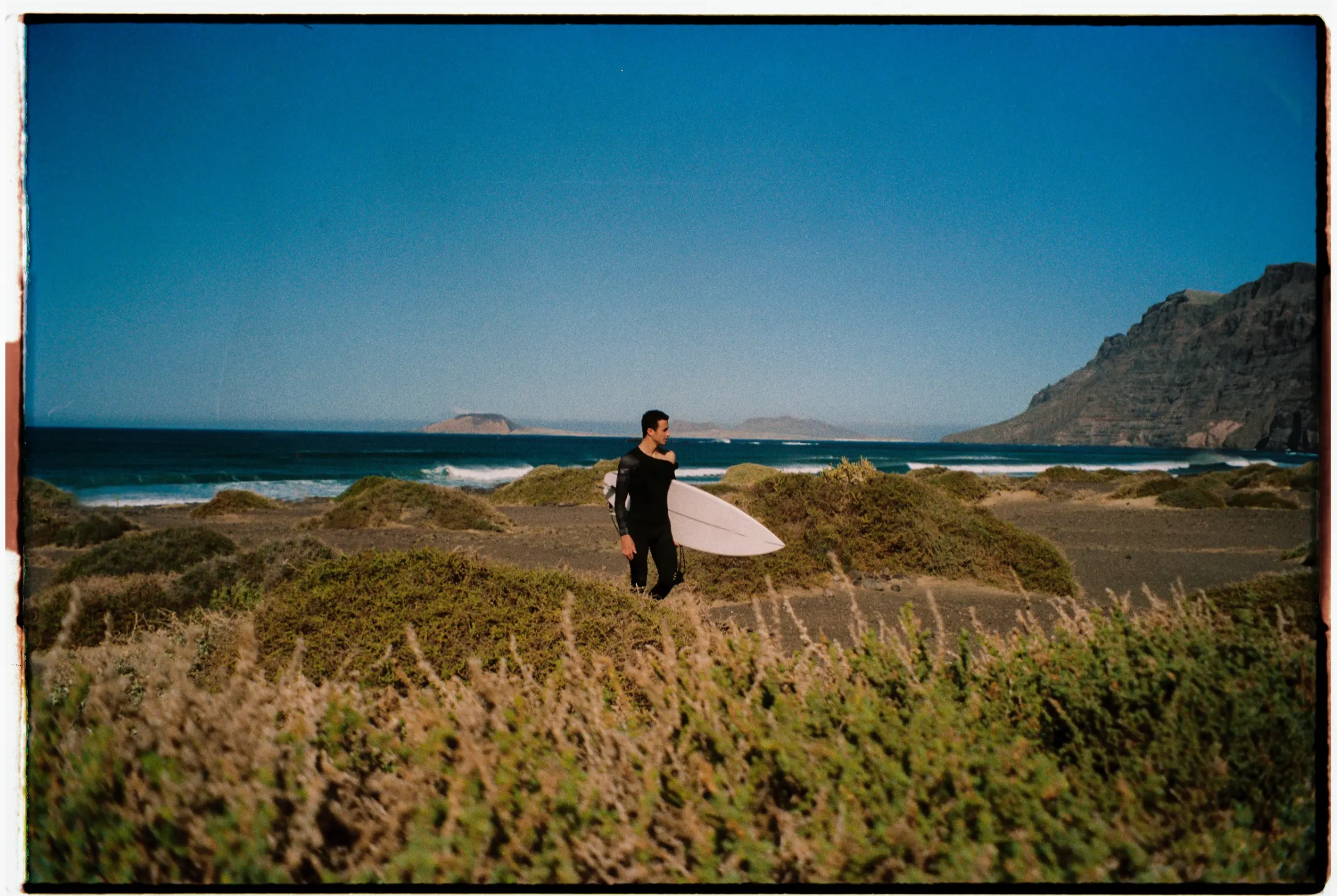
Respeta las prioridades
Parece una obviedad, pero muchas veces los problemas empiezan aquí.
Respeta el turno de cada surfista, no remes por dentro para ganar la posición y observa durante unos minutos antes de entrar al agua. Muchas veces entender cómo funciona un pico es mucho más importante que coger una ola más.
Alquila y compra material en proyectos locales
Siempre intento recomendar negocios de gente de la isla.
Si necesitas alquilar material, La Santa Pro Center es una muy buena opción.
Y si estás pensando en comprar una tabla, merece la pena conocer el trabajo de Yeray García, de JFB Shapes. Sus tablas están diseñadas específicamente para las olas de Lanzarote y llevan muchos años formando parte de la escena local.
Un último consejo
El surf me ha enseñado que una ola nunca pertenece a quien llega primero, sino a quien entiende el lugar donde está.
Si vienes a Lanzarote con respeto, paciencia y ganas de aprender, descubrirás mucho más que buenas olas. Descubrirás una comunidad que lleva muchos años cuidando este rincón del Atlántico y haciendo posible que hoy podamos seguir disfrutándolo.
Intentemos entre todos que siga siendo así durante muchos años más.