
One of the things I enjoy most when I’m back in Lanzarote is visiting small wineries and talking to the people behind them. And one of the questions guests ask me most is where to taste and buy natural wine in Lanzarote.
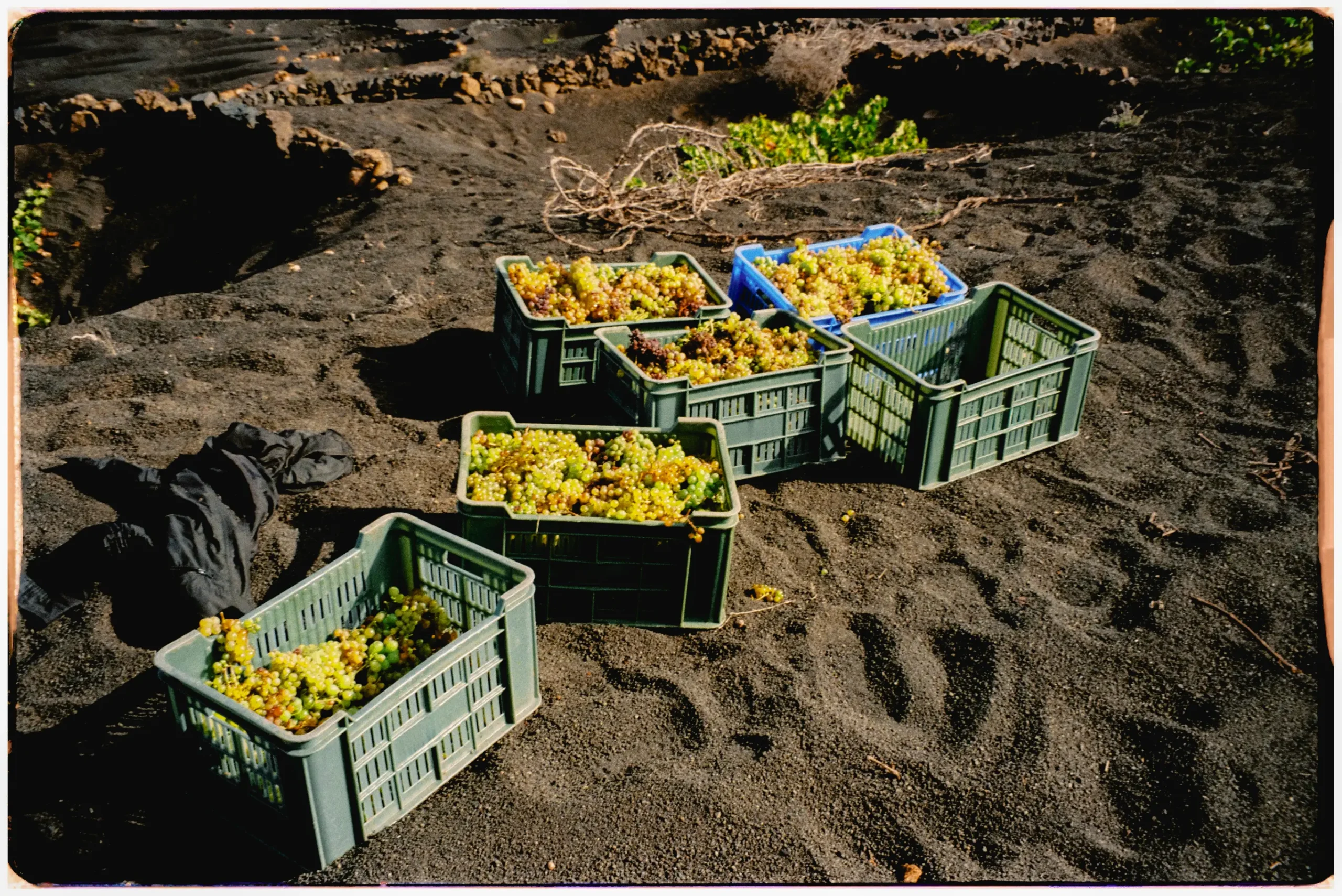
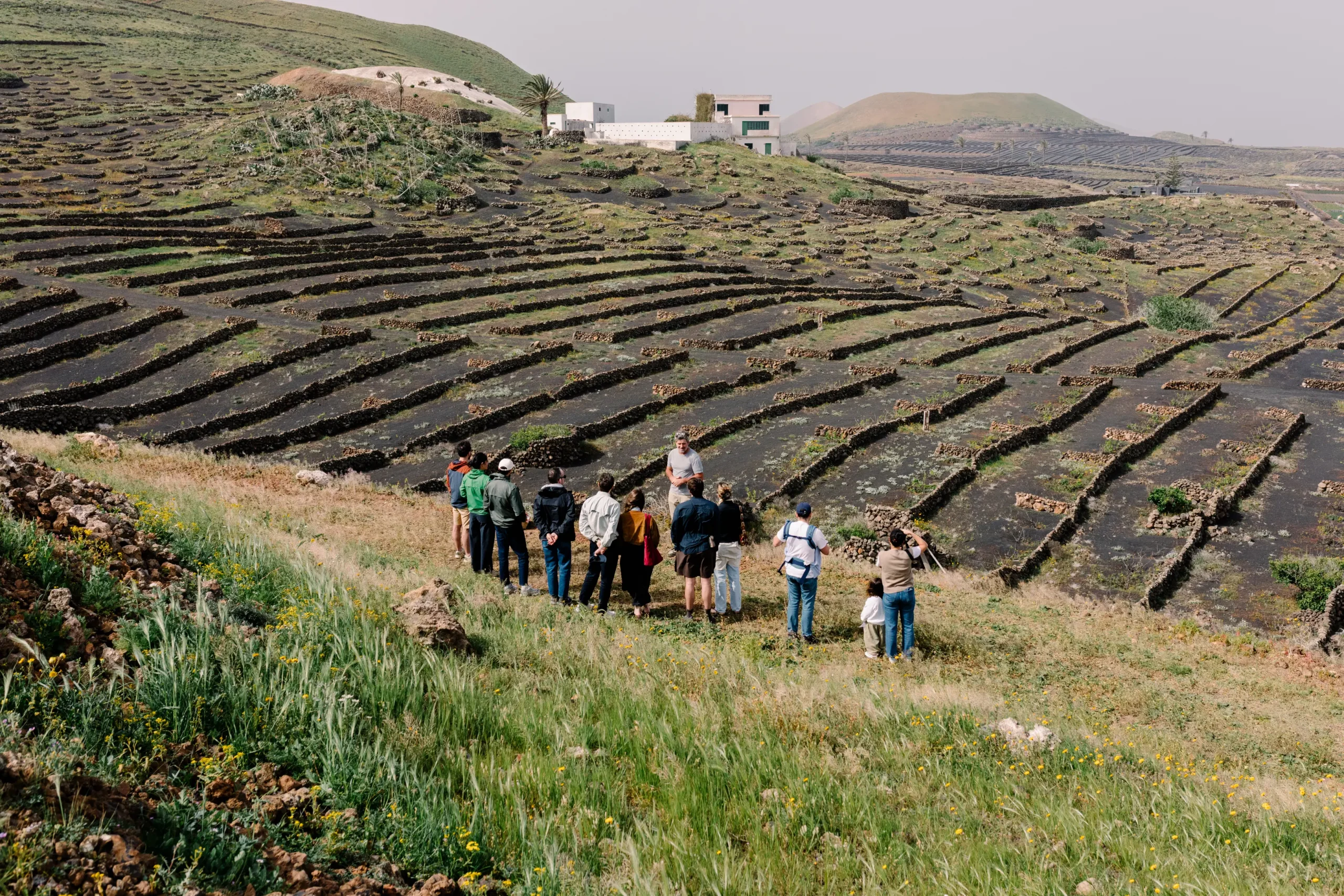
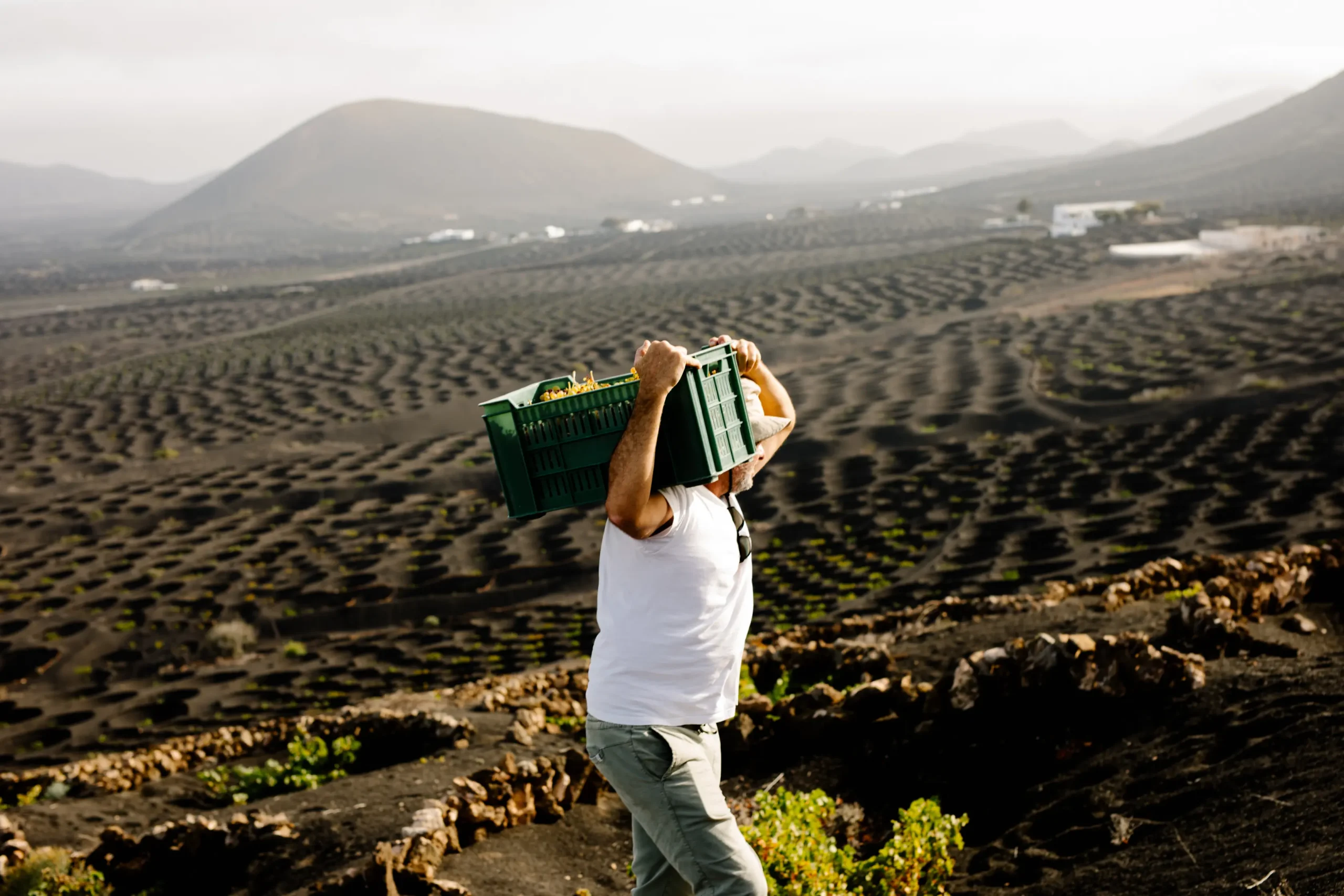
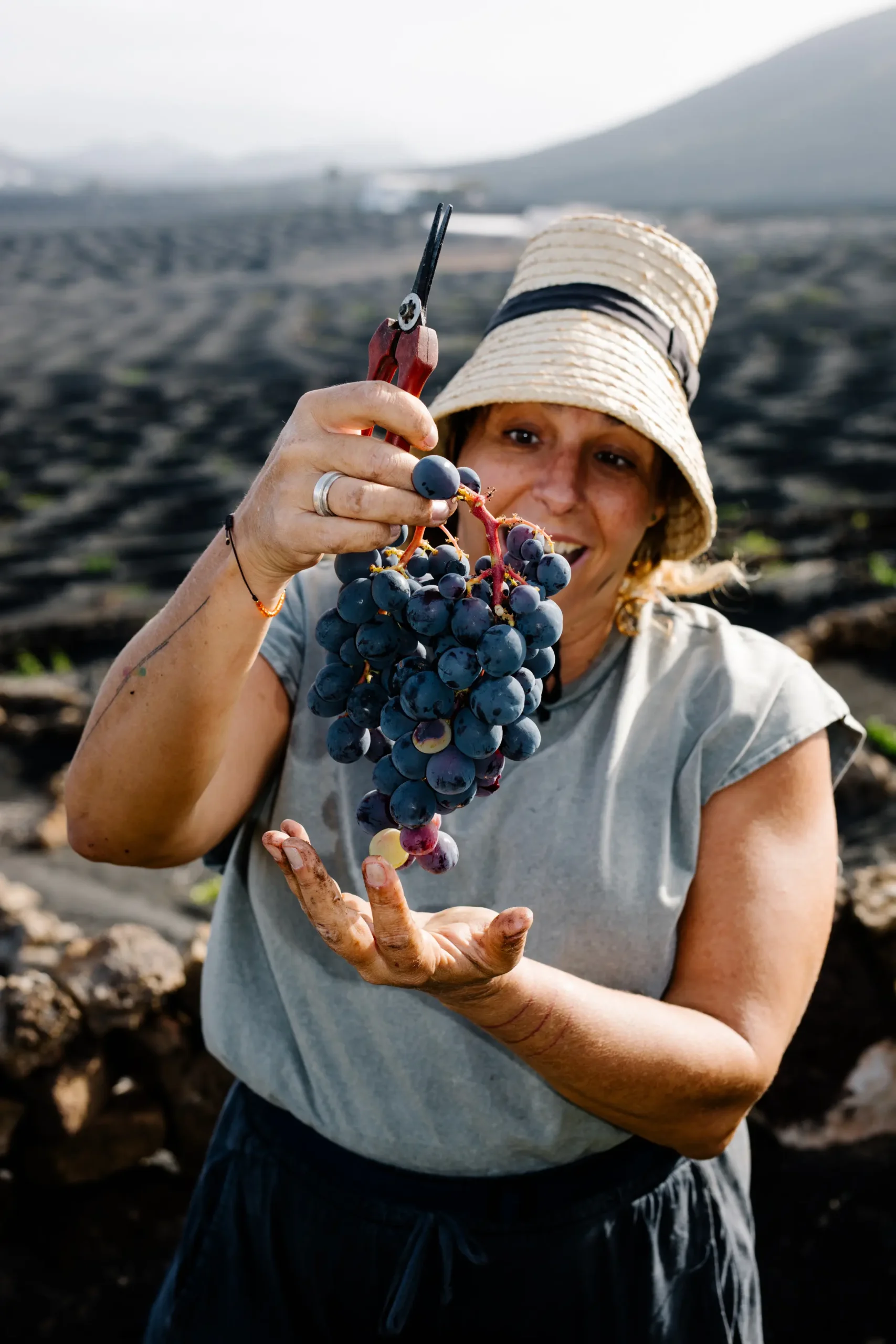
Winegrowing here is unlike anywhere else in the world. Growing vines in volcanic ash, with strong winds and very little water, takes an amount of work that’s hard to imagine until you see it for yourself. Every bottle is the result of many hours of effort and a way of working with the land that has been passed down through generations.
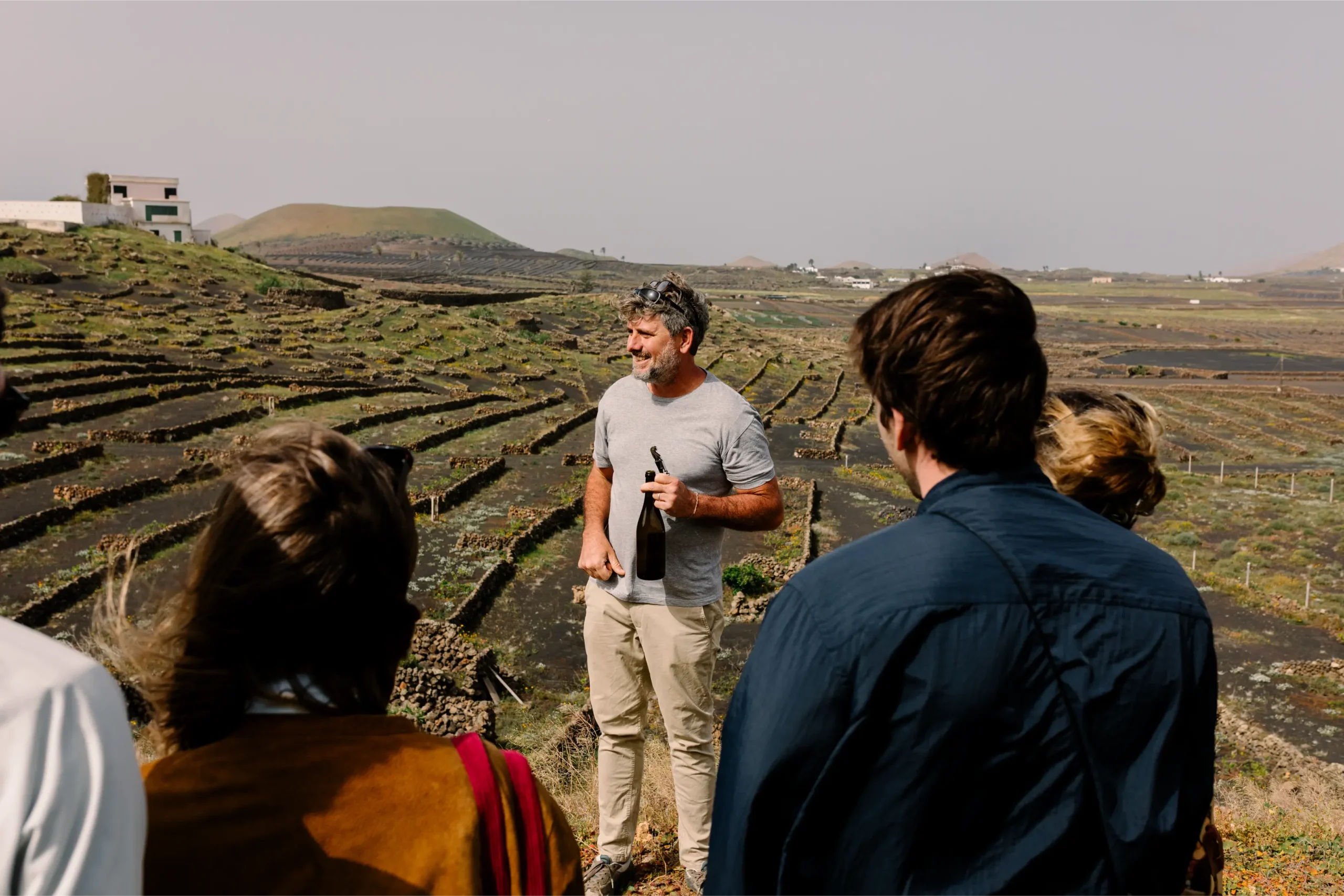
I always try to recommend small, family-run projects, wineries where you can still talk to the person making the wine, walk among the vines and understand what makes Lanzarote’s wines so special. These are the natural and low-intervention wineries I most like to visit. Several of them are in Tinajo, just a few minutes’ drive from La Santa.
What is a natural or low-intervention wine?
When I talk about natural or low-intervention wine, I mean wine made from grapes grown without synthetic chemicals, picked by hand and fermented with their own yeasts, with no corrections in the cellar and little or no added sulphites. There’s no official definition and every winery does it its own way, but they all share the idea of letting the vineyard speak.
In Lanzarote this makes even more sense. Old vines, many of them ungrafted, planted in hollows dug into the volcanic gravel, local varieties like Malvasía Volcánica, Diego and Listán, and a saltiness that only the Atlantic gives. These are wines with real character.
Bodega Cohombrillo · La Vegueta (Tinajo)
Instagram: @bodegacohombrillo
Cohombrillo is one of the projects that best represents the new generation of winemaking in Lanzarote. It’s run by Laura and Eamonn, who make natural wines on a very small scale using only grapes from their own organically farmed vineyards. I particularly like their approach because every part of the process involves as little intervention as possible, allowing the volcanic landscape to speak through the wine.
If you get the chance to visit, take the time to talk with them and hear about the passion behind the project. We hosted a dinner there with our friends from The Chopping, and I tell you all about it in this post.
Bodega Tisalaya · Tinajo
Instagram: @bodegas_tisalaya
Tisalaya is Miguel Morales’s personal project and one of the family-run wineries I most often recommend visiting. Its vineyards lie between Timanfaya National Park and Los Volcanes Natural Park, on plots that are more than sixty years old, with some Diego vines over a century old.
Everything is done by hand and only a small number of wines are made, always aiming for wines with character that can age well and express Tinajo’s volcanic landscape. When you visit, you quickly understand that wine here is made slowly and with a great deal of respect for tradition.
Taro Vinícola · La Vegueta (Tinajo)
Instagram: @taro.vinicola
Taro Vinícola is the project of Pablo Matallana (@matallana.pablo), a young winemaker who studied in Valencia and worked in Chile and Priorat before coming back to the Canaries. His family is from Lanzarote, and he bottled his first wines here in 2018. The name comes from the taros, the small stone shelters you find among the vines where farmers used to take cover from the sun.
He farms around five hectares in the centre of the island, near Timanfaya, with organic viticulture, hand harvesting, native yeasts and very few sulphites. He makes whites from Malvasía Volcánica, Listán Blanco and Diego, a red from old Listán Negro vines in the Chibusque area and a pet nat. Production is tiny and much of it leaves the island, so if you see a bottle on a restaurant list, order it.
Titerok Akaet · El Cuchillo (Tinajo)
Instagram: @titerok_akaet
Titerok Akaet is one of Lanzarote’s most interesting projects if you enjoy low-intervention wines. It’s run by Marta Labanda and Juan Daniel Ramírez, and the whole project is built around bringing abandoned historic vineyards back to life.
They work with regenerative farming, spontaneous fermentation and minimal intervention in the winery, allowing each plot to keep its own identity. More than simply making wine, they’re recovering part of the island’s agricultural heritage and showing that there’s another way of doing things.
Bodega La Verea · Tinajo
Instagram: @bodega_laverea
La Verea is one of the projects that has caught my attention most in recent years. Sergio Cabrera works exclusively with local varieties such as Malvasía Volcánica, Listán Blanco, Listán Negro, Diego and Moscatel, grown sustainably in vineyards that are more than seventy years old.
The wines ferment with native yeasts, and some of them, such as Tabaiba, are aged in a mix of concrete egg, used barrels and stainless steel to bring out the salinity and minerality of the volcanic soils with real precision. Production is very limited, and every bottle shows a deep respect for the landscape and the island’s traditional grape varieties.
Bodega David Fernández · Haría
Instagram: @davidfernandez_wine
David Fernández is part of a new generation of winegrowers taking a very personal approach to Lanzarote wine. He started the project in 2020 with just five hundred bottles and now works to recover small, century-old plots across different parts of the island. Each vineyard is vinified separately, with spontaneous fermentation and minimal intervention, so every wine reflects the place it comes from.
What I especially like is that his wines speak more about the landscape than the technique. They’re very Atlantic wines, full of tension and salinity. He runs visits by booking through his website, and it’s well worth going.
Tao Viticultores (Jable de Tao) · Tao, Teguise
Instagram: @taoviticultores
Tao Viticultores, which started out as Jable de Tao, was born in the village of Tao, in Teguise, about 15 minutes’ drive from La Santa. It’s run by Alexis Betancor and Matuli Rodríguez, who brought back the way wine was made at the family winery in Morro de Tao, in small concrete tanks and chestnut barrels, with nothing added.
The wines are made by Carmelo Peña (@carmelopenasantana), a winemaker from Gran Canaria who worked in Bierzo, Chile and Portugal and is also behind Bien de Altura in Gran Canaria. He stands for wines with little or no intervention. They work old, ungrafted vines, some over a hundred years old, on jable, the sand that gives the area its name, and on volcanic rofe, with Malvasía Volcánica, Listán Blanco, Diego and Listán Negro.
Their first vintage was 2022, and wines like La Diego, Tenesar and Chupadero are already highly rated outside the Canaries. If you like Diego, start there.
One last tip
If you decide to visit a winery during your stay, give yourself plenty of time. Walk through the vineyards, ask questions, listen and talk to the people who make the wine. It’s the best way to understand the huge amount of work involved in growing vines in a landscape like Lanzarote.
Keep in mind that almost all of these are very small wineries, with no shop open to the public and no fixed visiting hours. Message them on Instagram first and book ahead. If you’d rather just turn up, with a restaurant and shop on site, the bigger wineries in La Geria will suit you better.
Whenever you can, buy directly from the winery. You’ll take home a unique bottle while supporting the small, family-run projects keeping one of the island’s most important traditions alive. And if you want good food to go with the wine, here are my favourite places to eat in northern Lanzarote.
Take it slow. The wine here deserves it.